The modern, cloud-native successor to VMware vSphere — decoupled 3-tier architecture, declarative GitOps engine, and self-describing bare-metal resilience.
PiVirt is an open, distributed virtualization management platform engineered by Progressive Innovation LAB (PiLab). Built from the ground up to overcome the licensing traps, monolithic fragility, and proprietary lock-in of legacy hypervisors like VMware vSphere (ESXi & vCenter), PiVirt combines bare-metal KVM/QEMU performance with modern cloud-native principles: ConnectRPC / gRPC, declarative YAML manifests, mTLS service mesh, and self-describing host storage.
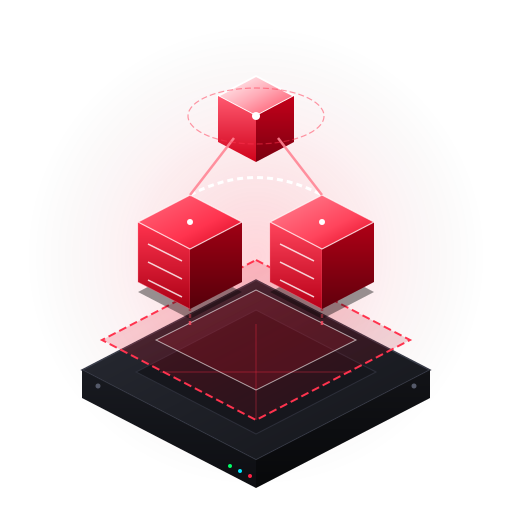
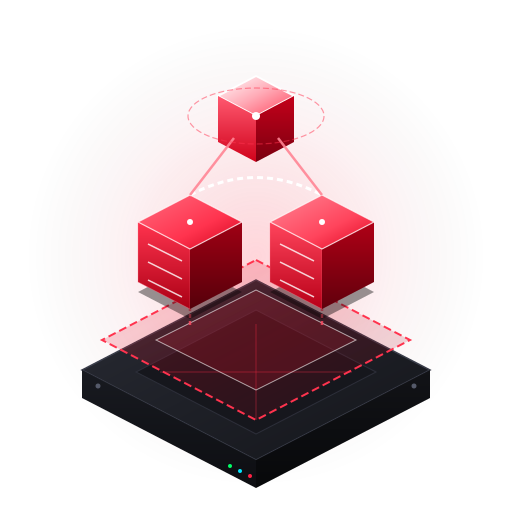
PiVirt introduces a clean, three-tier architectural boundary that mirrors and modernizes the enterprise virtualization stack:
Tier
Component
Open / Free
VMware Analogue
Kubernetes Analogue
Primary Role
Host
pivirtd
Open Source
vmkernel
CRI / containerd
Standalone host executor daemon. Low-level QEMU/KVM lifecycle, QMP control, veth bridges, and local disk volumes. Zero cluster awareness.
Node
agent
Free (≤ 4 nodes)
hostd / Host Client
kubelet
Node supervisor & local control plane. Manages datastores, templates, standard vSwitches, and local identity (standalone) or streams mTLS telemetry & tasks (managed).
Cluster
director
Enterprise / Paid
vCenter
kube-apiserver
Centralized cluster control plane. Multi-node scheduling (DRS), cluster HA, Distributed Virtual Switches (DVS), cross-host IPAM, and multi-tenancy.
Host Tier — pivirtd (The Modern vmkernel)
Ultra-lightweight, crash-isolated hypervisor daemon. Talks directly to Linux KVM, QEMU, and local disks over a private Unix socket (/var/run/pivirt/pivirtd.sock). Because it has zero cluster logic, it almost never restarts — ensuring management agent crashes or network reboots never kill running VMs.
Node Tier — agent (The Modern hostd)
Node supervisor and service mesh gateway. Can run completely standalone without a cluster director (ideal for edge, homelabs, and 4-node clusters) with local authentication and Direct Console UI (virt-appliance), or enroll into a director via mTLS to execute distributed tasks and stream live telemetry.
Cluster Tier — director (The Modern vCenter)
Intelligent cluster control plane. Delivers automated VM placement and load balancing (DRS), cluster-wide distributed virtual switches (DVS), cross-host overlay networking (VXLAN/VNI), multi-tenant isolation, and a modern React administrative console.
Wire Protocol — virtpb (Shared Schemas)
Type-safe ConnectRPC & gRPC foundation. Standardized Protobuf contracts shared across the entire ecosystem, enabling first-class SDKs, high-speed streaming, and declarative resource validation.
Manage your entire virtualization topology declaratively using Kubernetes-style YAML manifests. Use pivirtctl apply -f and pivirtctl delete -f across VirtualMachines, Networks, StoragePools, VirtualDisks, and IPPools with automated dependency ordering and reverse-dependency cascading deletion.
Self-Describing Hosts & Zero-Loss DR
The physical hosts are the ultimate ground truth. pivirtd persists declarative YAMLs locally while the agent stamps cluster identities (pivirt.hu/uid, pivirt.hu/owner-org, pivirt.hu/generation). If the central Director database is ever destroyed, a new Director reconstructs cluster state and tenancy directly from bare metal.
Two-Generation Integrity
Host-local generation (metadata.generation) and cluster generation (pivirt.hu/generation) are decoupled. Local host maintenance and direct CLI adjustments never trigger false cluster drift or race conditions with the cluster controller.
Zero-Downtime Management
Strict process boundaries guarantee that agent upgrades, certificate rotations, or transient network partitions will never affect hypervisor execution. Your workloads stay online no matter what happens to the management tier.